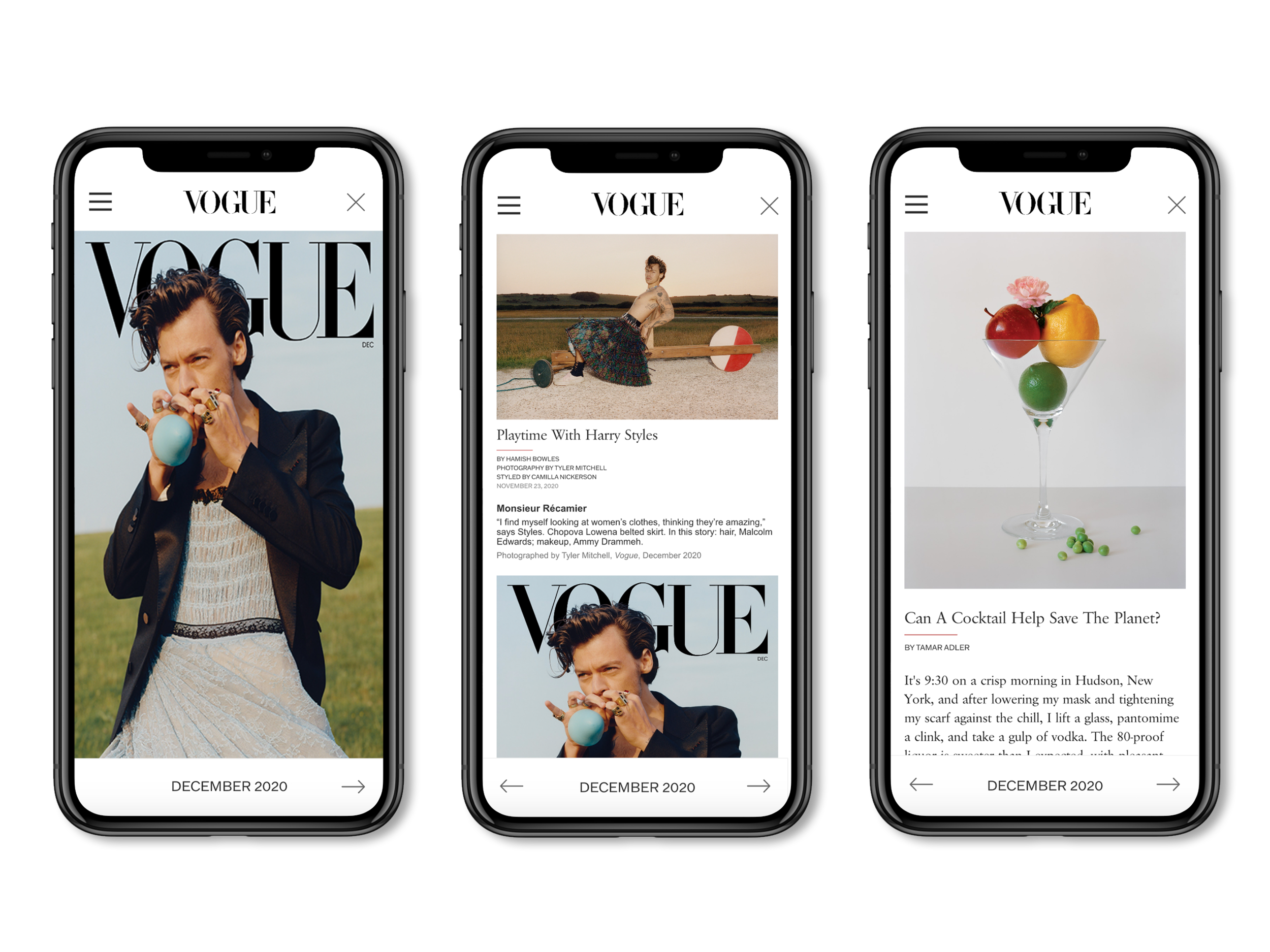

Vogue Mobile App Ecosystem Redesign
Product Strategy • UX/UI Design
A conceptual redesign exploring how Vogue’s mobile platforms could be unified into a single, seamless digital experience. This case study focuses on improving usability, content accessibility, and brand continuity by rethinking how subscribers interact with Vogue’s editorial, runway, and digital content within one cohesive ecosystem.
Vogue has long been a defining voice in fashion and editorial storytelling. As the brand expanded its digital presence, it introduced three standalone mobile applications designed to extend its content beyond print:
Vogue Runway — A platform dedicated to live streaming global runway shows and housing an extensive archive of fashion photography dating back to 2000.
Vogue Magazine — The primary subscriber app, offering digital access to current and past magazine issues.
VogueWorld — A free content platform featuring online articles, news, and editorial stories from Vogue’s website.
While each app served a unique purpose, the separation of platforms created a fragmented user experience. Subscribers were required to move between apps to fully engage with Vogue’s content ecosystem, creating friction in navigation, discovery, and overall brand continuity.
Note: This project was completed as an academic exercise and is not affiliated with Vogue.
Overview
Objective
Reimagine Vogue’s mobile ecosystem through a unified platform that streamlines access, enhances usability, and maintains the integrity of Vogue’s editorial identity.
Solution
The proposed solution centered on consolidating Vogue’s mobile offerings into a single subscriber hub.
Key initiatives included:
Redesigning the Vogue Magazine app for improved usability
Integrating VogueWorld’s free content into the subscriber platform
Centralizing runway, editorial, and digital storytelling
Simplifying navigation across content tiers
The experience was designed to balance modern usability with Vogue’s luxury visual standards.
The Design Process
Phase I: Research & Analysis
Brand and Competitive Analysis
The process began with an in-depth exploration of Vogue’s brand to identify elements that set it apart. This included evaluating Vogue’s desktop site and mobile apps to pinpoint strengths and areas for improvement.
A competitive analysis provided insights from similar fashion and general media apps, highlighting effective transitions and potential pitfalls. Desktop and app experiences were compared to ensure visual and functional consistency.
User Research
User feedback from app reviews and competitive research informed usability interview questions. Key insights were captured in empathy maps, detailing user thoughts, feelings, needs, and actions while interacting with Vogue’s apps and site.
These empathy maps illuminated pain points and informed user-centric design solutions.
Phase II: User-Centered Design
Personas
Five personas were created based on user research, each reflecting distinct user behaviors, goals, and preferences. Personas included:
Short biographies.
Key behaviors and goals.
Personality traits and tech proficiency.
Subscription habits across other platforms.
These personas ensured the redesign met the diverse needs of Vogue’s audience.
Information Architecture
A streamlined information architecture was developed to simplify navigation, mirroring the desktop site for consistency.
Wireframes prioritized functionality and layout, serving as a blueprint for the user experience before introducing visual elements.
Phase III: Prototyping
Visual & Functional Execution
A high-fidelity prototype brought the redesign to life, integrating the refined architecture and interface design. This prototype addressed user pain points and showcased the envisioned app’s functionality and visual appeal, providing a tangible representation of the final product.
The interface design adhered to Vogue’s style guide, incorporating brand-consistent colors, typography, imagery, and iconography. This ensured a seamless connection between the magazine and its digital platforms while enhancing user recognition.
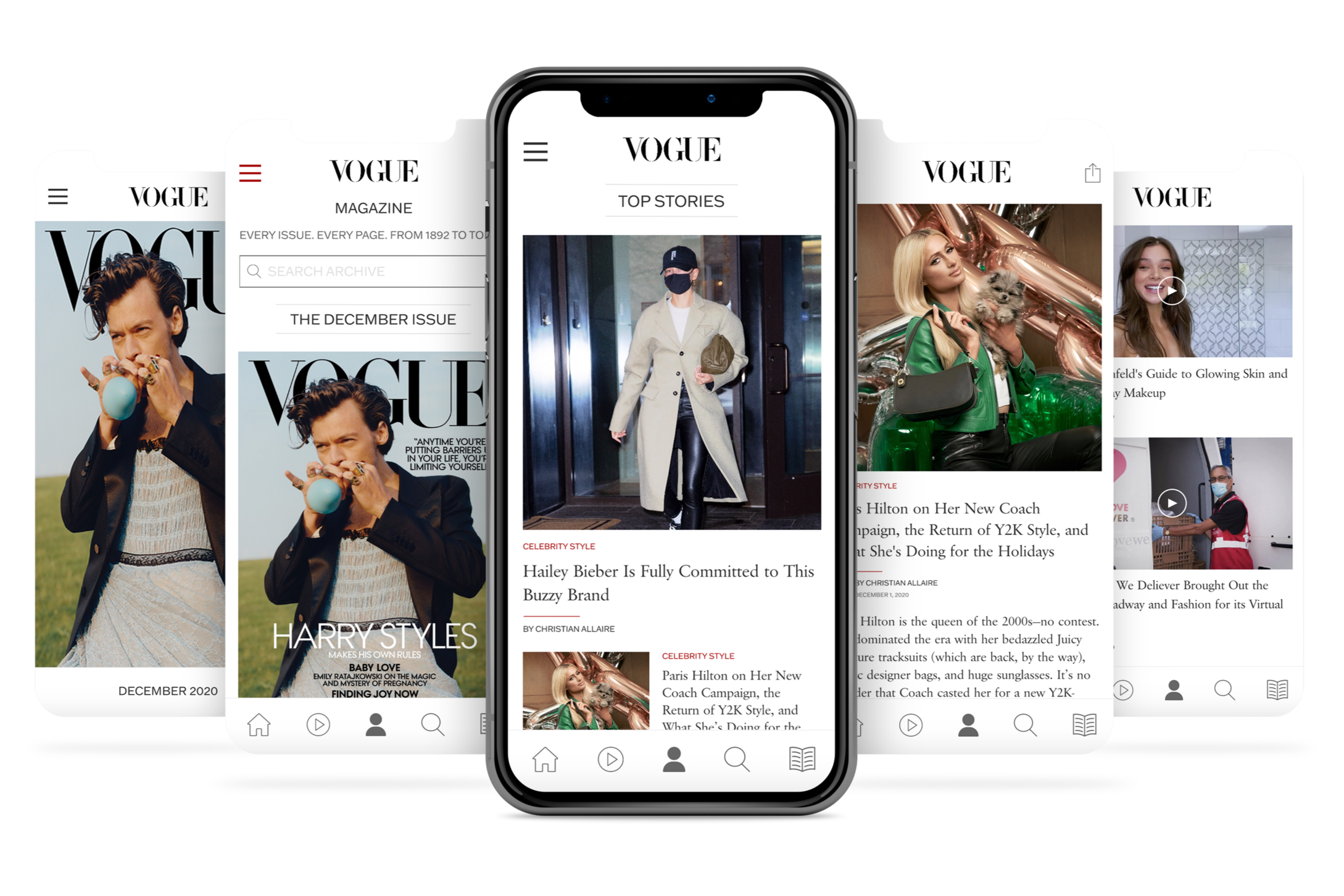
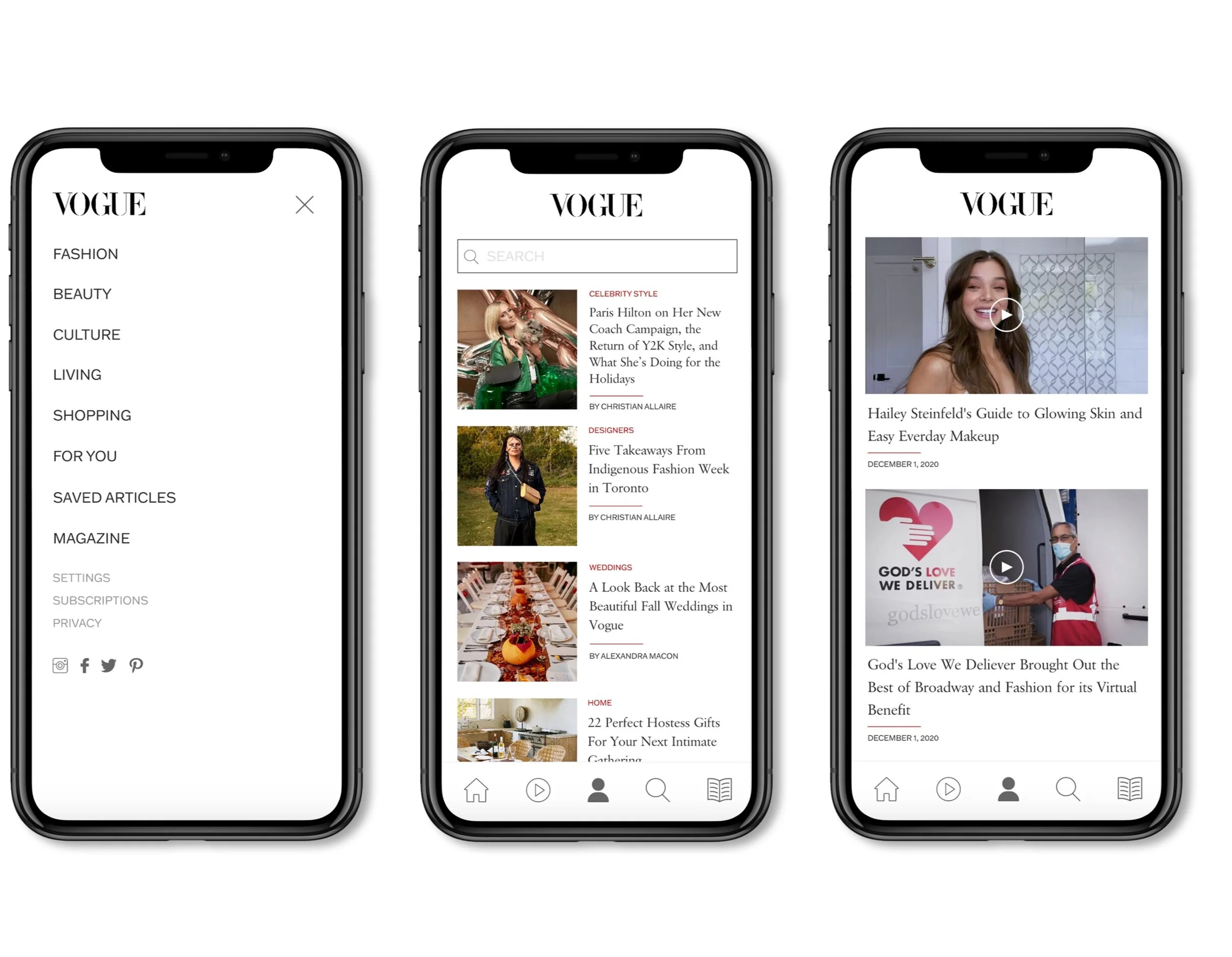
Homepage
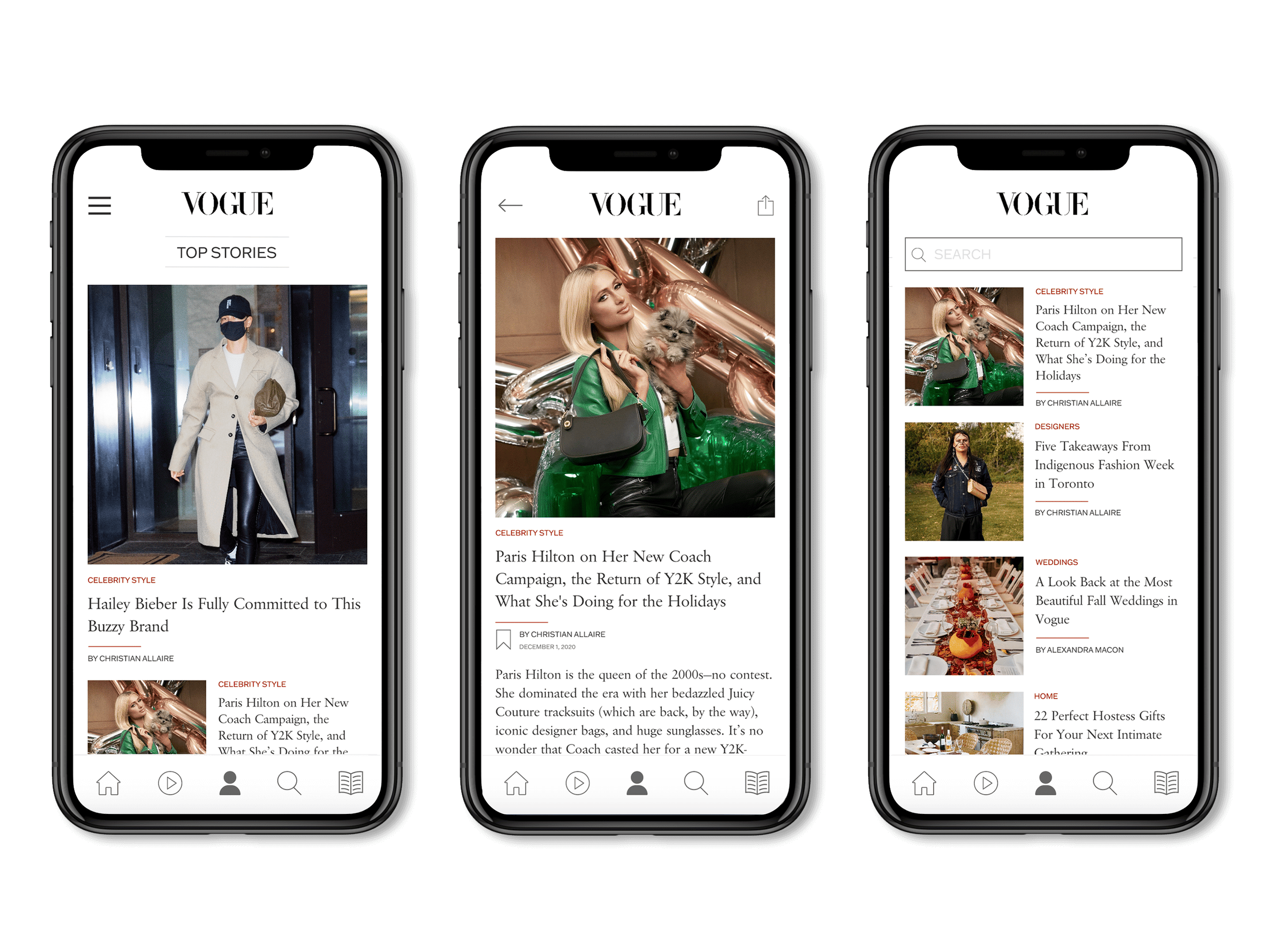
Browse Top Stories
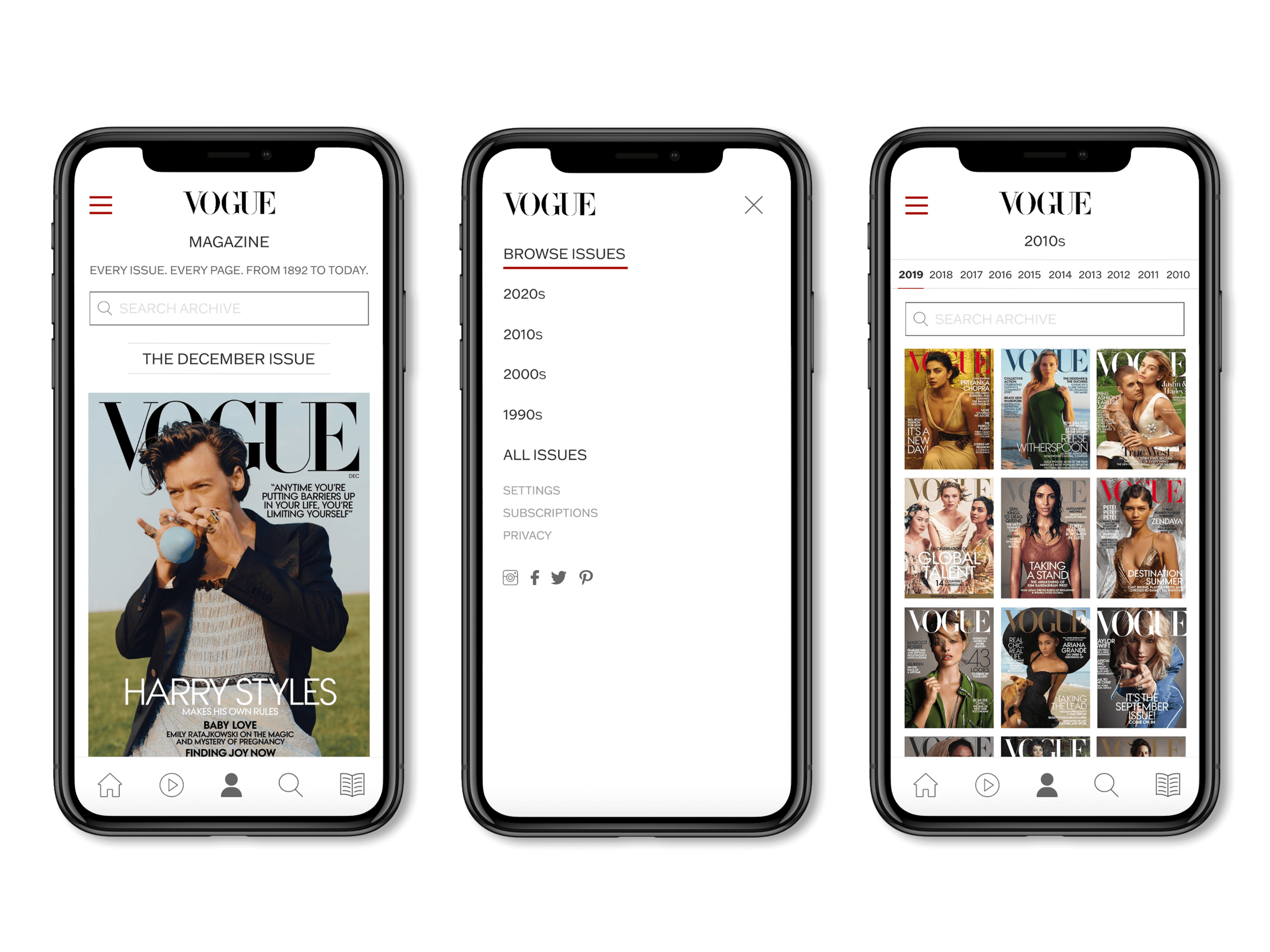
Browse Magazine Issues